What is Dropshipping? What does the dropshipping model business gain and lose?
Have you heard about dropshipping but aren’t sure how it works? Let’s explore what dropshipping is and dive deeper into this business model so you can better understand this online business method!
1. What is Dropshipping?
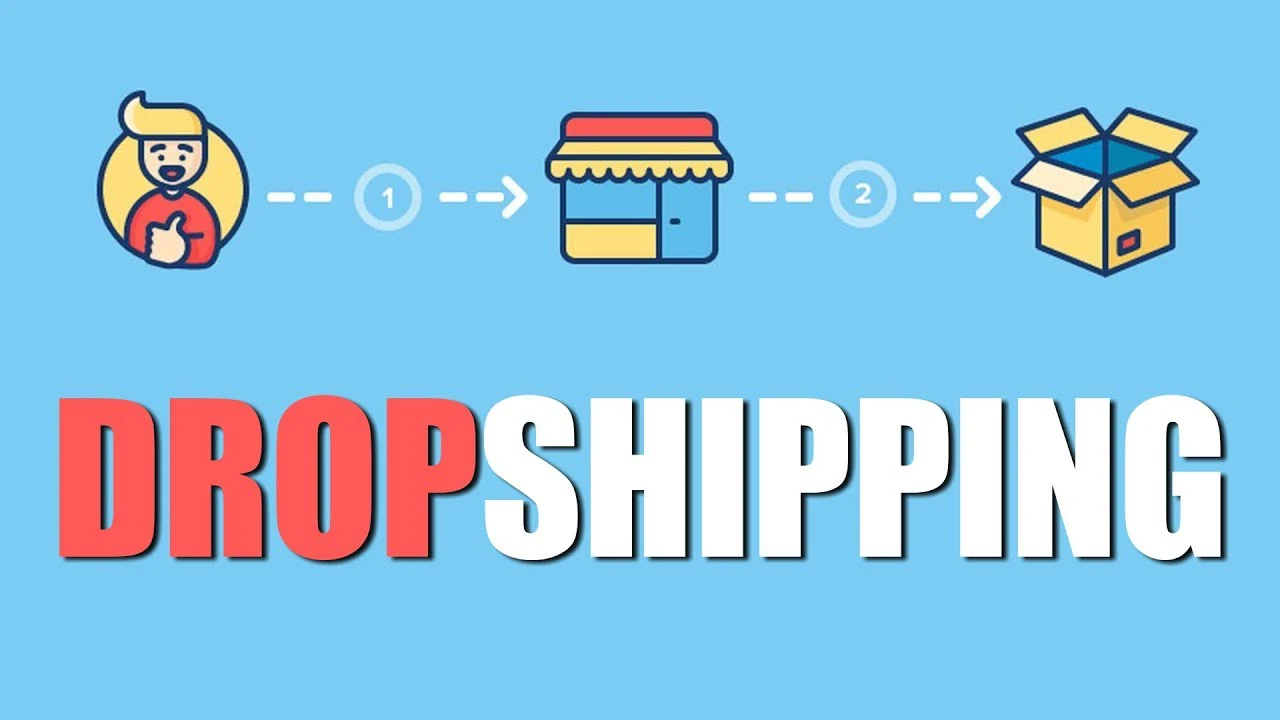
The dropshipping model can be simply understood as follows: You are the seller. You list the supplier’s product at any price you choose and handle the marketing. When a customer places an order, you pay the supplier the listed price. The supplier then records your customer’s information and ships the product directly to them. You just need to track the order and collect the COD (Cash on Delivery) payment.
However, in Vietnam, this model hasn’t developed as strongly as it has abroad. The main reason lies in the fact that the profit margins in Vietnam are not as high as in other countries.
This is partly due to the relatively lower consumption level in the Vietnamese market compared to more developed international markets. Also, goods entering Vietnam typically go through too many intermediaries. To reduce costs, most sellers in Vietnam tend to buy in bulk and sell through different channels.
See more products: Buy advertising accounts
2. The Dropshipping Process
The dropshipping process generally includes the following steps:
-
Choose the products to sell
-
Market the products to reach potential customers
-
Confirm customer orders
-
Contact the supplier
-
Discuss pricing and shipping with the supplier
-
Place the order and track its progress
-
Continue marketing the products you want to sell
3. Pros and Cons of the Dropshipping Business Model
After learning about the definition and process of the dropshipping model, let’s take a closer look at its pros and cons.
3.1. Advantages of Dr
The dropshipping model offers several distinct advantages:
- Easy to set up:
Running a dropshipping business only involves three main steps: finding a supplier, building a sales channel, and starting your sales operations. - Low operating costs:
In traditional business models, a major portion of expenses comes from setting up and running retail operations, including warehousing and inventory management. Dropshipping eliminates these costs—you don’t need to store inventory, handle goods, pack, or ship. Your main expenses are setting up a website and marketing. - Low initial investment:
As mentioned above, you don’t need a large amount of capital to start an online business. Most of the investment goes into building your sales channel and advertising to attract consumers. - Low risk:
If your store doesn’t sell, you won’t lose money on unsold inventory. If you decide to stop selling a product, there’s no risk of financial loss due to leftover stock.
-
Cross-border selling:
You can sell products anywhere, at any time, because your online store doesn’t require a physical office, warehouse, or staff. -
Sell any product you want:
You can research and sell any product you’re interested in. Even on your own website, you can offer various products in the same category to give consumers more choices and better meet their needs. -
Easily scalable business:
In traditional business models, scaling up means more investment of time and money into your store. With dropshipping, the supplier handles all order fulfillment and product management. This frees you up to focus on scaling by expanding to multiple sales channels, optimizing your website, and finding new potential products to add to your catalog.
3.2. Disadvantages of the Dropshipping Model
Although dropshipping offers many advantages for online sellers, the model also comes with limitations:
Lack of integration and data synchronization between wholesale and retail e-commerce platforms:
A dropshipping order requires seamless integration and data synchronization between the platform used by the wholesaler and the platform used by the retailer. However, Vietnam’s wholesale e-commerce platforms like Thitruongsi, Chosionline, etc., are not yet technologically advanced enough to directly connect with domestic retail e-commerce platforms.
Moreover, although there are around 20 e-commerce platforms in Vietnam, only a few Chinese sellers on Tiki and Lazada currently offer cross-border dropshipping.
High logistics costs in Vietnam:
At present, a single order shipped from China to Vietnam costs around 50,000 – 60,000 VND for packages under 1kg. This doesn’t include additional costs such as order processing, sorting, and packaging according to seller specifications, which places dropshipping sellers at a disadvantage.
Risks from the Vietnamese preference for COD payments:
According to Google and Temasek, 75% of online orders in Vietnam use the cash-on-delivery (COD) method. This results in a high rate of order rejections and cancellations, posing significant risks for dropshipping sellers. Moreover, COD payment has low liquidity; sellers must wait 2–4 days for reconciliation with the delivery service to receive their payment.
See more products: Buy advertising accounts
4. How to Start a Dropshipping Business
4.1. Market Research
This is one of the essential steps you must take seriously if you want to grow your business. You’ll need to conduct market research, collect data on customer needs, market trends, and current conditions. In addition, you should also research your competitors to understand what they’re doing, how they do it, and analyze their strengths and weaknesses.
4.2. Identify Product Types to Sell
You need to determine this early on when starting a dropshipping business. You can choose to sell utility items, food, fashion, household goods, pharmaceuticals, cosmetics, etc. You may decide to specialize in a particular category or offer a mix of products to better meet customer needs, either through retail or wholesale.
4.3. Contact Suppliers
Once you have an idea of what types of products you want to sell, the next step is to reach out to suppliers. Set up agreements regarding terms and conditions if you want to work professionally and maximize your profits.

4.4. Create a Professional E-commerce Website
A website will be the foundation for all your business activities. Unless you’re a web designer yourself, you should invest in a professional web development service to create the most efficient online store. You may consider modeling your site after competitors or developing something completely new to establish a unique identity.
4.5. Operate the Business from Anywhere
As mentioned earlier, your website is the most important platform. You also need to expand your reach and promote your brand and website to potential customers. Don’t forget the various sales channels available to you, such as social media (Facebook, Zalo, Instagram…), forums (Webtretho, Lamchame, Tinhte, Voz…), and more.
4.6. Set Competitive Pricing
The goal is for you to make a profit while the supplier sells more products. Therefore, be sure to negotiate the best prices to build a favorable brand image. Be careful not to set prices too high, or customers may visit once, see the prices, and never return—let alone make a purchase.
4.7. Market Your E-commerce Store
One of the keys to successful and profitable dropshipping is effective marketing. Consider several advertising methods such as Facebook Ads, Zalo Ads, SEO (Search Engine Optimization), placing banners on news sites and blogs, etc. Make sure to clearly present your product categories, phone number, and contact information so customers can easily reach out and make purchases.
5. What Do Sellers Gain from Dropshipping in Vietnam?
-
Optimized Product Sourcing Costs:
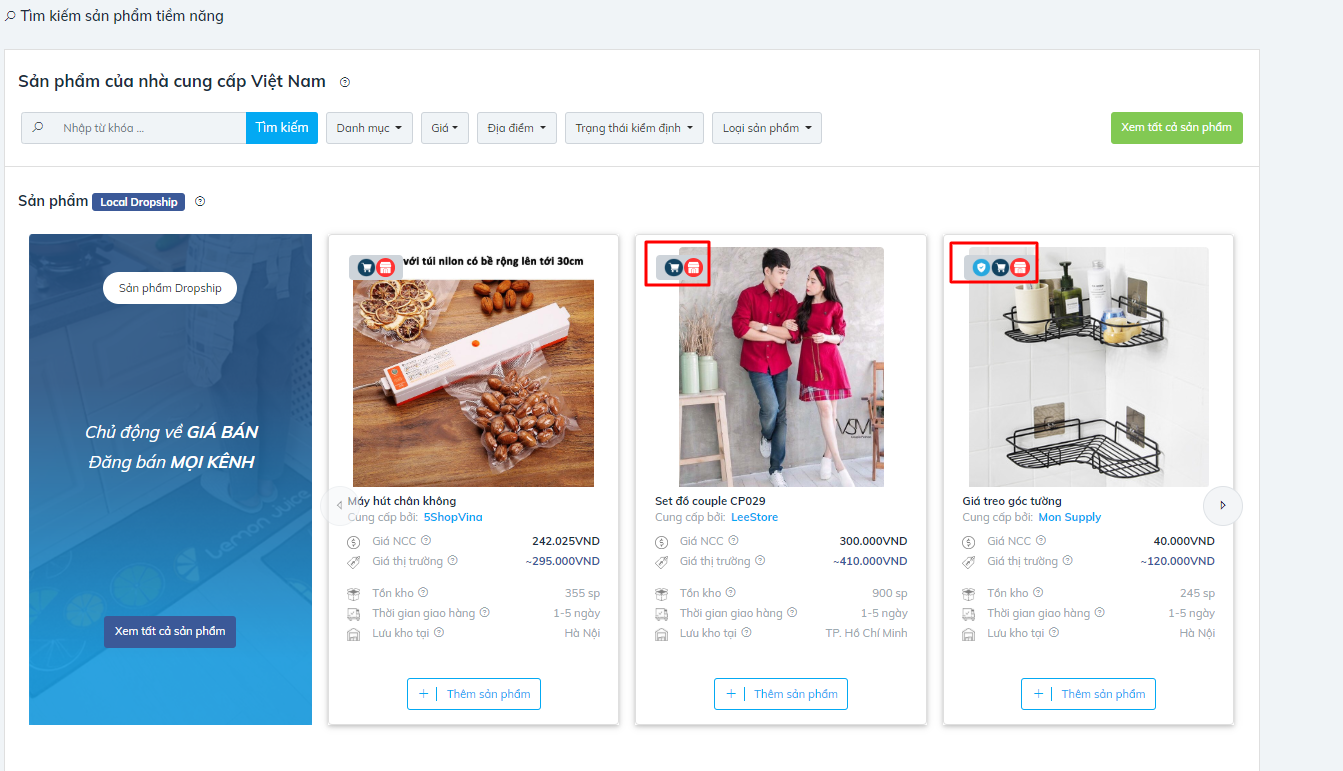
With a well-supported dropshipping platform in Vietnam, sellers can directly access sources from China, local sources, or affiliate sources without intermediaries, reducing procurement costs. They can then sell products directly to customers and profit from the margin between the dropshipping cost and the final selling price, without the need to stock inventory.
-
Low-Risk Multi-Channel Sales:
Even without owning inventory, dropshipping allows effective multi-channel selling. Inventory data is updated by the supplier on their sales channels, and sellers only need to use this data to update their dropshipping channel inventory.
-
Lower Logistics Costs:
Dropshipping simplifies operational costs by eliminating warehousing, inventory management, and storage fees, greatly reducing logistics costs.
Therefore, in a market like Vietnam where dropshipping is still relatively new, sellers truly need a platform that optimizes the following:
-
Product sourcing
-
Shipping
-
Order processing time
-
COD reconciliation
-
Warehousing
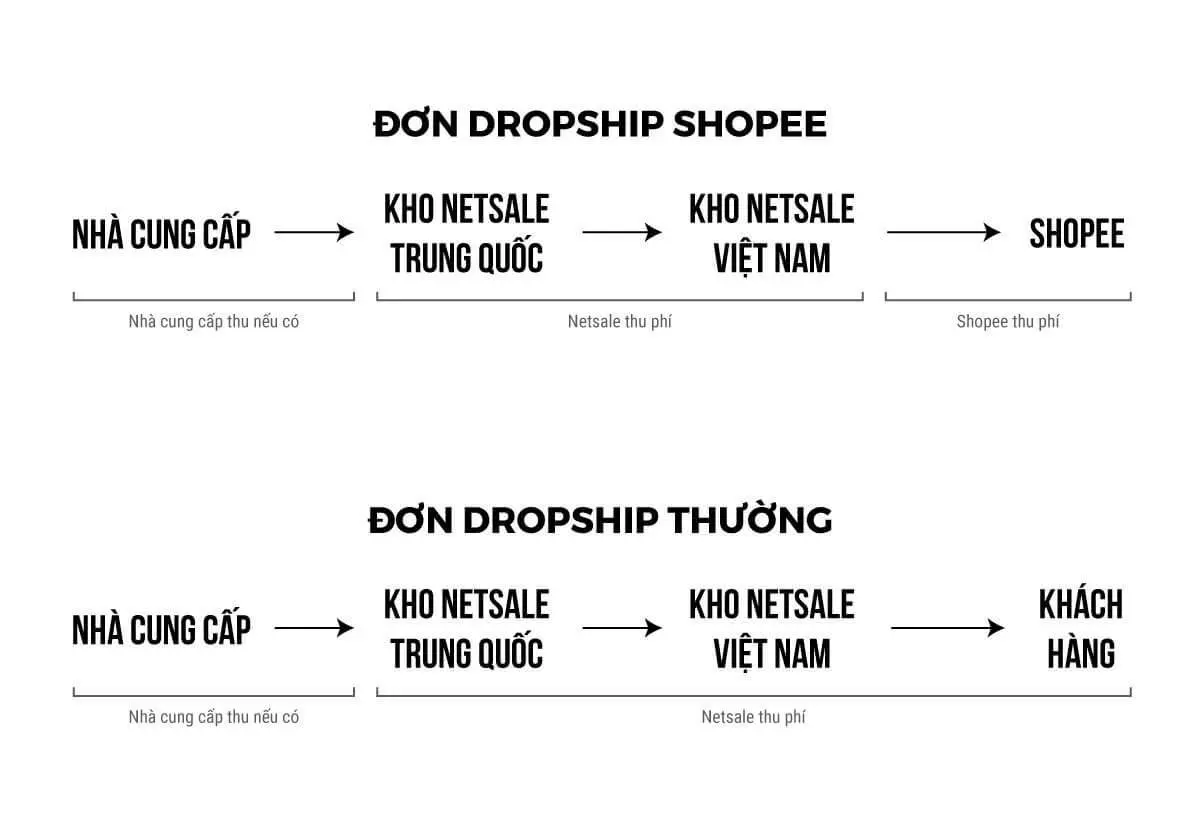
Currently, there are many platforms offering dropshipping services. One noteworthy platform that meets sellers’ needs is Netsale.
-
6. Five Challenges of Dropshipping and How to Overcome Them
6. Five Challenges of Dropshipping and How to Overcome Them
Unlike traditional businesses, you don’t need to stock or hold inventory. Instead, you work with suppliers who fulfill orders on your behalf.
While you do receive a discount per product, low order quantities can result in higher prices. Though operational, warehousing, and staffing costs are minimized, the low discount rates and high product prices mean that your final profits might be small. So how can you overcome this?
Solution 1: Raise Your Prices
While low prices attract online shoppers, they’re not always ideal. Dropshipping may reduce warehousing costs, but product acquisition costs can remain high, reducing profits. However, raising prices suddenly might backfire, so how should you go about it?
For example, if you sell milk and baby products, consider increasing each item’s price by VND 10,000 or a moderate amount that doesn’t shock customers. Alternatively, add value to your products through better service, making customers less sensitive to price increases.
Solution 2: Increase Product Volume
If profit per item is low, increasing the volume of sales is key. For instance, if you receive a 15% discount on a VND 1,000,000 order (equaling 100 items), but only sell 30–40 items a month, then scale your business to sell 300–400. This volume boost can give you stronger bargaining power with suppliers.
6.2. Challenge 2: High Advertising Costs
To sell your products, you need to attract customers. In the world of e-commerce, there are many ways to find and draw customers to your store. This leads to advertising costs—especially pay-per-click (PPC) ads—taking up a significant portion of your shop’s financial plan.
The more competitive and popular a product is, the more expensive the related keywords become. For example, if your profit margin is 15% per product, and you decide to spend half that (7,500 VND) on PPC advertising, will you be able to make sales?
At that budget, you’ll only turn a profit if each click costs between 1,000 VND and 4,500 VND and a customer decides to buy after 3–4 clicks. Otherwise, you’ll be losing money. Therefore, you must carefully calculate and manage your ad spending.
Solution: Optimize Your Keywords
To optimize your ad campaigns, focus on keyword optimization. This involves testing, adjusting, and continuously experimenting to find the most effective campaign. However, achieving this requires a significant investment, so make sure your finances are in good shape before diving in.
To identify effective keywords, try running test campaigns with your current keywords, and eliminate those that are irrelevant or rarely clicked. For the remaining ones, create content that closely matches customer search intent. Additionally, consider advertising on multiple platforms to diversify your customer acquisition channels. Google Ads isn’t the only option—you can also try email marketing, social media, and other media platforms.
If you’re not ready to invest in Google Ads, try Facebook Ads or build an effective email marketing campaign. These methods can help create a memorable customer experience and introduce your shop to a broader audience.
6.3. Challenge 3: A Lot of Competition
Dropshipping is a convenient business model that doesn’t require much capital. Because it’s so simple and accessible, anyone with a product source and a decent discount can start an online shop. However, this advantage leads to intense competition.
Anyone can start a shop and sell products. As a result, the market can quickly become oversaturated, making competition inevitable. So, how can you attract customers and outperform your competitors?
Your competitors are numerous, and they use a variety of advertising strategies—mainly on Google Ads and Facebook. A piece of advice: seek advertising opportunities beyond these common platforms and carve out your own niche. Your customers don’t just search on Google or Facebook—they also browse forums, Q&A sections, and news websites. These are your “blue oceans” to explore.
Remember, if you can’t be the first, be the best. And if you can’t be the best, boldly go where no one else has ventured and build your own path to success.
See more products: Buy advertising accounts
6.4. Challenge 4: Limited Branding Opportunities
When you choose to run a dropshipping business, you accept that you won’t have control over the product like in traditional retail models. You can’t handle packaging, labeling, or inspect the product’s condition. This limits your ability to build your store’s brand.
So how do you build and maintain a lasting image in your customers’ minds? Even though you can’t control the product directly, you can still use tools and experience to attract customers. This includes optimizing your website to draw interest, creating a seamless and convenient shopping experience, and providing the best customer support possible.
Here are some ways to build your own brand:
-
Create an excellent product page: Your website or online store is your storefront. Provide attractive images, engaging descriptions, videos, and blog posts so customers want to stay on your page.
-
Allow easy order tracking and quick communication: Make it simple for customers to track their orders and contact you when needed.
-
Personalize order confirmation emails.
-
Call customers to thank them after a purchase.
-
Always treat customers respectfully, whether or not a sale is completed.
In addition to a great on-site experience, leverage tools to stay connected with customers—such as social media, forums, and live chat—to provide customer care while reinforcing your brand image.
6.5. Final Challenge: Dealing with Suppliers
Customer and competitor challenges may not be the biggest headache in dropshipping—the suppliers are often the toughest part. Aside from the issue of items being out of stock when orders come in, you also have to deal with delivery times from suppliers.
Customers who shop online expect fast shipping. For food products, that might mean within 30 minutes or half a day; for fashion or household goods, within a day. But when you receive an order and contact your supplier, they might take 2–3 days to ship the product. You can wait—but your customer won’t.
These issues with product delivery are common when working with suppliers, and since you can’t control them, they become a downside of the dropshipping model. But you need to overcome these hurdles to sustain your business.
To avoid unfortunate situations, negotiate and clarify delivery timelines and product conditions with your supplier in writing or via email. As a middleman, you don’t control the delivery schedule, and your customers don’t like to wait. However, be honest with them about expected delivery times—adding a buffer of 1–2 days to the estimated delivery time you receive. If you communicate clearly, customers will be more understanding.
Besides offering lower prices, you can also attract and retain customers with free or discounted shipping. Reducing delivery fees may help them overlook the longer wait time. Give it a try!
If you need the most reputable payment method and advertising account provider, you can message the fanpage buybm365.com-Ads to receive advice from HT Media. In addition, you can follow the articles. Latest articles related to our Digital Marketing.