Summary of Google’s algorithms you need to know in SEO
For SEO practitioners, Google is truly a giant, and they are compelled to work within the rules set by this tech behemoth. Google’s rules are manifested through frequently updated and changing algorithms. Any SEO-er who violates them will be “punished” accordingly — at best, the website’s ranking will drop in search results; at worst, it may completely disappear from Google. It doesn’t take a detailed analysis to understand the consequences of going against Google’s rules. That’s why SEO practitioners must thoroughly understand and constantly keep up with the latest updates to Google’s algorithms. This article will summarize key Google algorithms to help you stay informed in a timely manner.
1. Google Sandbox
The Google Sandbox was developed over a decade ago, around May 2004, to restrict newly created websites (less than 3 months old) from achieving high rankings too quickly. These sites are suspected of using bad SEO tactics to grow rapidly, such as link spamming or building backlinks from low-quality or inappropriate sites.
To check whether your site is affected by the Google Sandbox, you can search for your website’s domain name. If it doesn’t appear in the results, it likely means you’ve violated Google’s guidelines. Another sign is that your key page keywords suddenly drop in ranking or disappear entirely from Google. This could result from internal issues like excessive duplicate content or automated content scraping, or external ones like malicious competitors linking your site to bad websites.
To prevent this, update your content regularly to avoid duplication, refrain from using copied or automatically generated content, and build clean, high-quality backlinks. Regularly check your backlink profile and address any suspicious activity immediately. If penalized, stay calm and focus on optimizing your website while Google carries out the penalty phase, which can last weeks or even months depending on severity.
On the positive side, the Google Sandbox helps eliminate shady competitors who rely on black-hat SEO tricks to climb search rankings. Nevertheless, SEO practitioners should be vigilant and conduct regular checks to avoid falling into the Sandbox trap.
See more products: Buy advertising accounts
2. Google Panda Algorithm

While many find pandas adorable, for SEO practitioners, it’s the first “beast” released by Google. Launched on February 24, 2011, the Google Panda algorithm startled many SEO professionals by rendering their hard work useless in a flash — websites dropped in ranking dramatically. Since then, Google has continuously updated this algorithm through various versions.
Google Panda targets sites with duplicate or unhelpful content that doesn’t add value for users searching by keywords. It also penalizes low-quality, superficial sites. This algorithm evaluates websites based on the following factors:
-
User time spent on content
-
Return visitor rate
-
Traffic from social media platforms
-
Content freshness
From this, it’s clear that Google Panda primarily targets website content. To avoid penalties, create original, engaging, and genuinely helpful content for readers. Doing so not only protects your site but also helps improve its ranking on Google.
3. Google Penguin Algorithm
Over a year after releasing its first “beast” — the Panda — Google unleashed a second creature that, while seemingly gentle, proved to be extremely dangerous: the Penguin. While the Google Panda algorithm focused heavily on content, Google Penguin targeted link practices. Websites that engaged in link spam, keyword stuffing, or buying/selling backlinks were severely penalized by Penguin.
Specific violations include:
-
Too many backlinks pointing to a single keyword
-
Overuse of anchor text on one page
-
A sudden influx of backlinks in a short period
-
Irrelevant keywords in anchor links
-
Backlinks from harmful websites (e.g., sites penalized by Google, infected with malware, etc.)
-
Hidden backlinks
-
Buying/selling backlinks or placing backlinks on unrelated sites
Looking at these violations, it’s clear that the best way to avoid being penalized by Penguin is to build a clean, diverse, and keyword-relevant link profile. It’s also important to regularly audit your backlinks to prevent competitors from intentionally placing your links on harmful sites to damage your ranking.
4. Google Zebra Algorithm
Following its predecessors, the third “beast” in Google’s arsenal arrived just as social media was booming — around March 2013. The Google Zebra algorithm specifically targets websites that spam links across major social media platforms like Facebook and Twitter.
Violations that trigger Zebra include:
-
Spamming links in unrelated comment sections or groups
-
Spamming links on personal Google+ profiles
-
Impersonating other Google+ accounts
-
Using multiple accounts to spam the same link
-
Excessive link spamming across many social platforms
The consequence of violating Zebra’s rules is a sharp drop in your website’s search rankings. To avoid this, implement a solid strategy for promoting your site on social media. This includes creating high-quality Google+ accounts, engaging with groups and communities selectively, and sharing links with purpose rather than spamming indiscriminately.
5. Google Hummingbird Algorithm

Barely six months later, on September 26, 2013, Google released a new, small but powerful algorithm: Hummingbird. This update caused quite a stir in the SEO community, as it reportedly affected 90% of all search queries. Unlike previous algorithms like Panda and Zebra, Hummingbird focused more on user intent rather than punishing violators.
Hummingbird analyzes the semantic meaning behind keyword phrases in the context of the query, ranking answers based on how well they match the user’s intent, rather than just exact keyword matches. The algorithm emphasizes whether the content on a website is useful and whether it directly answers the user’s query. This discourages spammy and irrelevant content.
See more products: Buy advertising accounts
6. Google Pigeon Algorithm

Another bird joined Google’s “beast squad” with the release of the Google Pigeon algorithm on July 25, 2014 — just enough time for SEO professionals to recover from the Hummingbird shakeup. Though Google never officially named this update, the SEO community dubbed it “Pigeon,” likely because it relies on Google PigeonRank technology to deliver more accurate and faster local search results.
The Pigeon algorithm was designed to improve the ranking of local search results, organizing data based on geographic location. Essentially, it aimed to enhance how Google displayed local business listings and location-based content.
SEO practitioners need not be overly concerned about Pigeon, as it doesn’t negatively impact your site’s search results. Instead, it optimizes local search (Google Local). To explain a bit more: PigeonRank is a fictional system (originally a joke by Google) where digital “pigeons” assess the relevance of web pages by analyzing and ranking them based on similarity and context.
Each “pigeon” evaluates websites to determine their relative value and builds a result list of the most relevant content to a user’s search. The more often a website is flagged as relevant by these metaphorical pigeons, the higher its PigeonRank, and the better its position in local search results.
7. Pirate Update 2
Around four years ago, Google began testing an algorithm designed to detect websites that steal content — those that copy articles from other websites — and penalize them. This was called the Google Pirate Update. About two years later, around mid-October 2014, Google rolled out an update to this algorithm, improving its ability to detect and handle content theft. The sites most heavily impacted by this update were those focused on music, video, and forums, as they are prone to content duplication and frequent “re-upload” activities.
Many reports showed that even large websites were affected. A notable example is torrentz.eu, which suffered a 50% drop in search traffic. The introduction of Google Pirate Update 2 was good news for websites that publish original and unique content, as they no longer had to worry as much about blatant copyright theft. However, websites in the film, music, and forum niches faced serious challenges and were forced to implement remedies as soon as possible.
8. Google Mobile Friendly
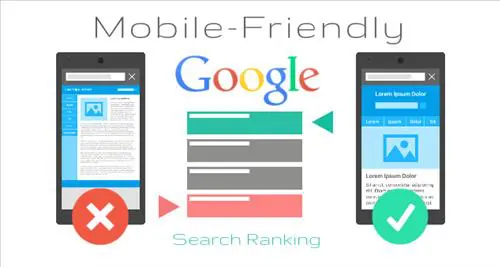
Most recently, in April 2015, Google released a new algorithm that aligned with Facebook’s display algorithm: Mobile Friendly. This update targeted the user experience on mobile devices, meaning it didn’t affect searches performed on desktop computers. If your website hasn’t been optimized for mobile, it may suffer a drop in rankings or even disappear entirely from mobile search results.
To learn more about this algorithm and Facebook’s changes at the time, refer to the article “Businesses Struggle to Cope with New Algorithms from Google and Facebook.” As an SEO specialist, it’s essential to know at least these 8 major Google algorithms, and to frequently stay updated with any new ones to make timely adjustments and maintain your site’s performance.
If you need the most reputable payment method and advertising account provider, you can message the fanpage buybm365.com-Ads to receive advice from HT Media. In addition, you can follow the articles. Latest articles related to our Digital Marketing.