Digital advertising in real estate industry, how to optimize cost and efficiency?
Real estate is an extremely competitive industry. A quick Google search will show you countless ads on the first search page, as well as a myriad of real estate banners on news websites. If you are in the real estate business, take a moment to stop and read this article. These are insights shared by Mr. Bùi Quang Tinh Tú on his blog. You are sure to find better ways to approach digital marketing.
Recently, I had the chance to collaborate with Phạm Phước Nguyên (Will Lì) to hold a workshop on more effective digital advertising strategies for the real estate sector. Today, I have some time, so I’m taking the opportunity to write this summary article to recap the key points that were shared in that session. Initially, the content was prepared by Will Lì, and I later added and adjusted a few parts, including refining the visuals for a better presentation during our workshop in Hanoi. Although the main topic of the session focused on real estate, I believe the general knowledge and guidance from this article can be applied to many different industries.

Some Terminology in Real Estate
Before diving into the content, there are a few concepts and terms that we need to understand:
-
Investor: An organization (or sometimes an individual) that owns capital or has been granted the right to manage and use capital to invest in building a specific project. The investor is fully responsible to other investors and the law regarding quality, construction progress, costs, and investment capital as well as legal compliance. Examples include Vingroup, Novaland, FLC, Sacomreal, Đất Xanh, etc.
-
Real Estate Consultancy and Brokerage Firms: These are often called real estate brokerage firms. Their main activities include property valuation, advertising real estate, advising on property investment and business, legal consulting, managing marketing for real estate projects, and conducting property auctions. Some investors also own brokerage companies, like Đất Xanh and Sacomreal. Other firms focus solely on consulting and brokerage, like CBRE and Savills. Some brokerages may only sell or receive exclusive selling rights from specific investors.
-
Real Estate Sales Staff: Sales employees who work for investors or real estate exchanges to sell the projects they are responsible for. They earn commissions based on the sales they make, according to the company’s regulations.
-
Real Estate Broker: Independent individuals not employed by any company, acting as intermediaries between buyers and sellers, earning commissions for each property they sell based on an agreement with the seller.
-
End-User Buyers: Buyers who purchase real estate for personal use.
-
Investment Buyers: Buyers who purchase real estate with the aim of reselling it for profit rather than using it themselves.
Characteristics of the Real Estate Industry
The real estate industry is unique in that many sales and brokerage employees are also responsible for running ads and finding customers — tasks that are typically handled by marketing teams.
Some investor companies may have a dedicated sales team for their projects (in the form of a trading floor) and a separate marketing team that handles advertising, customer acquisition, and forwarding leads to the sales team. Novaland is an example of this model.
Other companies act as investors but have marketing departments that focus solely on brand-building and advertising, not customer acquisition. In these cases, the brokerage floors and sales staff themselves must run ads to find customers, which often leads to problems and challenges in the industry.
See more products: Buy advertising accounts
Real Estate is a Highly Competitive Industry
Real estate is one of the most highly competitive industries, and it’s fair to say it’s a “bloodbath.” For example, consider a housing project with about 1,000 apartments on sale, but in reality, over 3,000 sales staff from various brokerage firms are competing to sell these units. For the investor, the main concern is selling all 1,000 units, and regardless of how many people are selling, only 1,000 units will be available. Among the 3,000 salespeople, some will sell 4-5 units, some 2-3, and some just one. In the end, only 700-800 of them will make any sales, while the remaining 2,000 will sell nothing.

This situation leads to several issues:
-
Wasted Resources: All sales staff often receive some financial support from the company (ranging from 10-15 million VND depending on the company) and may also spend additional personal funds on ads in order to sell properties. In this case, the money spent by the 2,000+ salespeople on ads but failing to make any sales is a huge waste. Additionally, the high level of competition drives the advertising costs up to alarming levels (10,000-15,000 VND per click on Google Ads).

-
Spam Advertising: Due to the intense focus on making sales at all costs, salespeople sometimes resort to tactics like spam text messages, emails, or posting false content to gather user information (e.g., advertising a house at an attractive price, but when customers inquire, they’re told the property is no longer available and are directed to another property).
-
Unfair Competition: Some salespeople even use automatic tools to click on their competitors’ Google Ads, driving up the bid price. While doing this, they often fail to consider the long-term consequences for the market, which ultimately impacts everyone, including themselves. High advertising costs are partly due to behaviors like this.
Real Estate is a Long-Term Industry
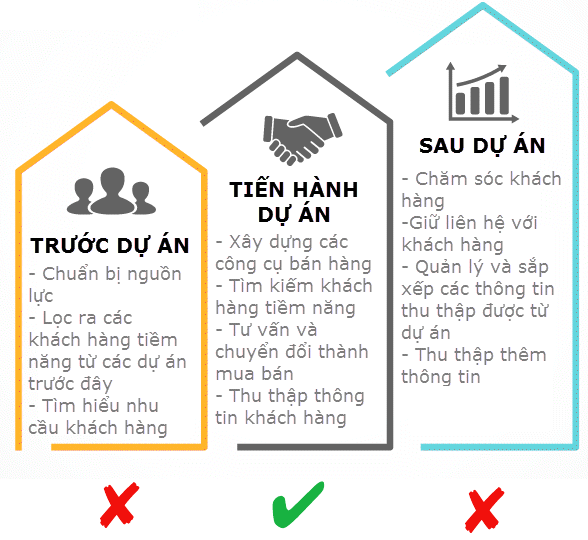
However, many parties are thinking in the short term with seasonal approaches. Typically, the real estate sales process consists of three phases:
-
Before the project: This includes preparing resources, filtering potential clients from previous projects, and understanding customer needs.
-
During the project: This involves creating sales tools, finding potential customers, providing sales consultations, and collecting customer information.
-
After the project: The focus here is on customer care, maintaining contact with customers, managing and organizing the information collected from the project, and gathering additional information.
But currently, most companies only focus on the “during the project” phase and neglect the initial preparation and post-sales phases. Most real estate investors and trading floors still struggle to properly manage their customer lists for each project. In fact, the real customer lists are often held by the sales staff, and when they leave the company, these lists are lost. The company provides advertising budgets for sales staff to find customers, but in the end, it cannot fully control the effectiveness of those customer lists.
To solve this issue, it’s not something that can be fixed overnight. It requires a change in management at the top level of the company to build a system capable of managing, tracking, and interacting with customers at every phase.
The real problem is the lack of a system to manage customer relationships, which prevents real estate companies from effectively carrying out post-sales customer care, and as a result, they cannot effectively implement the “before the sale” phase either. The absence of preparation before sales directly impacts the sales process for projects.
So, what can you do?
If anyone can run ads, what can you, as a real estate sales staff, do to compete with other salespeople? This is a question that I hope this article will help answer. The answer lies in four key factors:
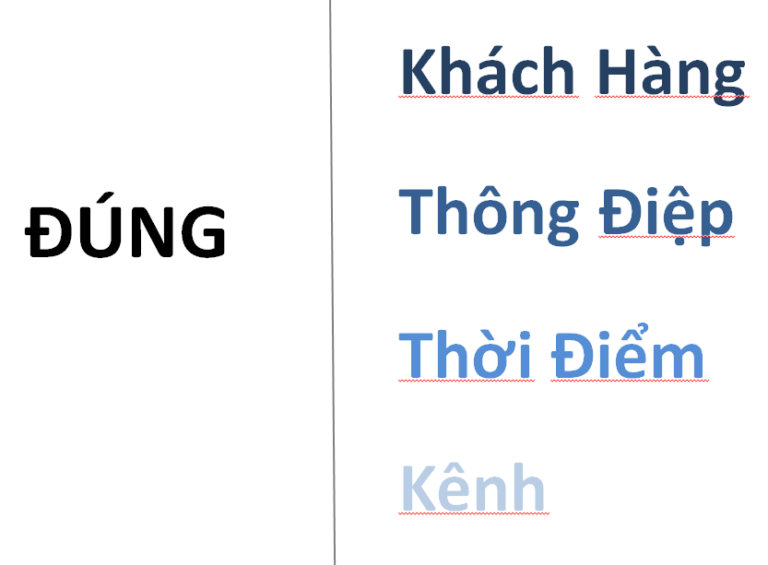
Targeting the Right Customers
The first important factor is to choose the right target audience. To do this, you need to understand the concept of the sales funnel.
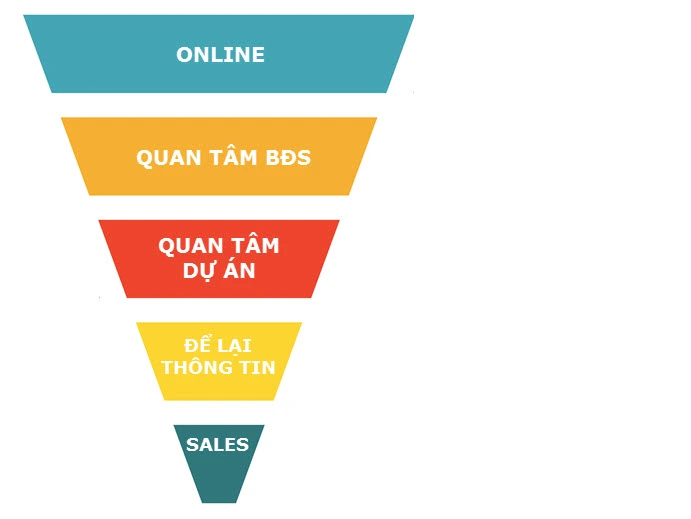
The first important factor is to choose the right target audience. To do this, you need to understand the concept of the sales funnel.
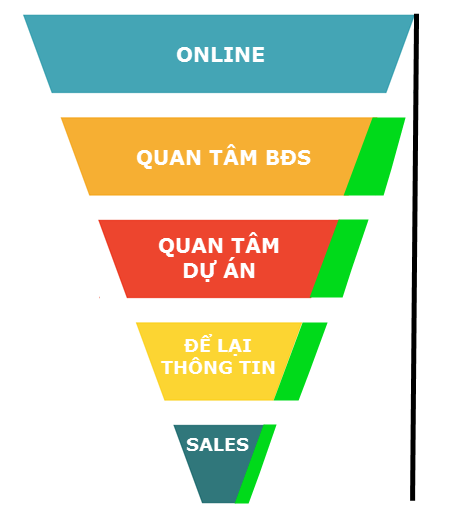
In my opinion, you can break down the sales funnel into the following steps:
-
General online customers with unclear needs: These customers can be reached through conventional advertising channels such as news websites, display ads on Google Display Network (GDN), ad networks, Facebook, Zalo, etc.
-
Customers interested in real estate or a specific project: These customers can be reached through channels like Google, Facebook, MuaBanNhaDat.vn, Cốc Cốc, or retargeting.
-
Customers who have left contact information on a landing page, called, filled out a lead form, or interacted via chat.
-
Customers who are currently being advised by sales staff.
There are two things you need to understand: at which stage in the funnel are you attracting customers, which channels are you using, and how can you gather more customer data?
To answer the first question, you need to understand that each advertising channel has different targeting capabilities:
Understanding which criteria each channel can target will help you decide how to use them effectively to reach the most suitable potential customers.
So, how can you increase the amount of customer data and, through that, increase sales?
There are two methods:
-
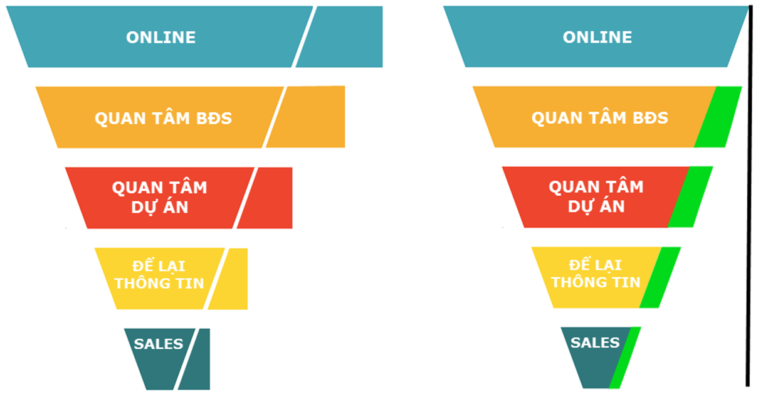
Expand the sales funnel by increasing the advertising budget and broadening the funnel’s input, which in turn increases the number of sales at the end of the funnel.
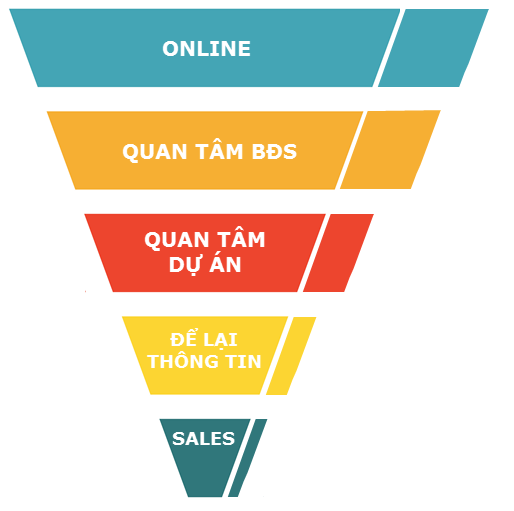
Advantages:
-
Quickly increases the number of customer leads.
-
Reaches new customers.
Disadvantages:
-
Increased costs.
-
As the number increases, quality and effectiveness may decrease.
Advantages:
-
No additional cost.
-
Improves long-term efficiency.
Disadvantages:
-
Does not generate new customers.
-
Optimization takes time to show results.
Each approach has its pros and cons. However, currently, most real estate companies focus on the first approach and pay little attention to the second (which requires a customer management system, as mentioned earlier). The most effective approach would naturally be to expand the sales funnel while simultaneously optimizing it to maximize efficiency for the cost incurred.
Deliver the Right Message
Next, we move on to the messaging factor. To effectively convey the right message to customers, you need to understand who your target customer persona is. How can you build your target customer persona? Here are some steps you can take:
Based on Project Information:
-
Project Location: Is it in an existing residential area or is it part of a future development?
-
Project Price: Is the project low-end, mid-range, or high-end?
-
Financial Policies: What kind of financing is available, which banks provide loans?
-
Amenities: Does the project include amenities such as a swimming pool, park, supermarket, or daycare?
-
Project Stage: When will this project be completed? 6 months, 1 year, 2 years?
-
Competitive Projects: Are there similar projects nearby?
Who can this project be sold to? Is it for those buying to live in, or those purchasing as an investment?
Based on Customer Behavior:
-
Demographic Persona: What is the age range of the buyers? Are they male or female?
-
Online and Offline Behavior: Are they active on social media? What do they do in real life (e.g., gym, shopping, driving)? Do their real-world activities reflect online behavior (e.g., check-ins, group participation, shared interests)?
-
Needs and Wants: What do they want when purchasing this project?
-
Problems in Daily Life: Does the project help solve these issues?
-
Factors Influencing the Purchase Decision: Location, price, completion time, etc.
-
What concerns or barriers prevent them from buying?
- Use the 5W1H Approach: This is a classic method but always effective. Ask yourself the 5W1H questions and answer them:

-
WHAT – What do they want to buy?
-
WHERE – Where do they want to buy?
-
WHEN – When do they want to buy?
-
WHO – Who wants to buy?
-
WHY – Why do they want to buy?
-
HOW – How will they make the purchase?
Observe and Ask the Customers: Pay attention to customer behaviors and don’t hesitate to ask your clients directly about what they need and want.
Use Online Tools
Here are some tools you can use to understand customer needs:
-
Google Keyword Planner: To see what keywords customers are searching for. Link
-
Google Suggest: To see what Google automatically suggests when you type a keyword into the search bar. Tools like KeywordTool.io and Ubersuggest.io are useful for this.
-
Google Analytics: Provides demographic information, content interaction, traffic sources, etc., based on website visits. Link
These tools can help you gather data about your customers’ behaviors and preferences, allowing you to refine your approach and increase your sales success.
The Right Time and the Right Channel
To understand which time and channel to use to reach customers, you need to understand what stage your customers are at in the sales process. Based on that, you can choose the most appropriate channel for interaction.
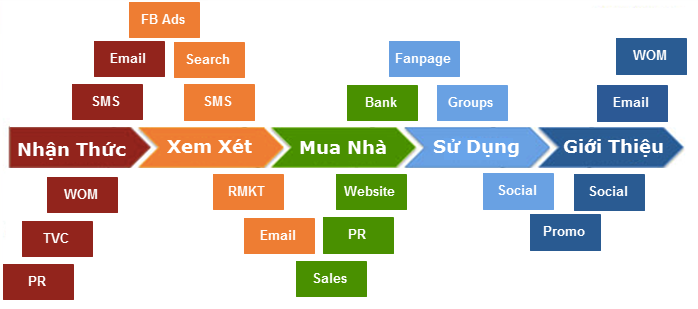
Awareness: This is the stage where customers begin to know about the project through channels like TVC, PR articles in newspapers, WOM (word of mouth), SMS, and email advertising.
Consideration: At this stage, customers know about the project and are considering whether to buy or not. The best channels to influence their buying decision at this stage might include Facebook ads, search ads, and retargeting.
Purchase: This is when they decide to buy the project. Channels that strongly influence their decision include sales staff, PR articles, personal real estate sales websites, project-based real estate websites, and information from banks.
Usage: After purchasing the project, this is the stage when they start using the project and its services. They might express their opinions about the quality of the project’s services on its fan page, participate in groups or communities (such as Facebook Messenger, Zalo), or share their thoughts on their social media profiles.
Referral: If they are satisfied with the quality of the project, they may recommend it to friends and acquaintances through WOM, email, or social media. Additionally, if the investor or real estate agency can create attractive promotional programs, this can help make referrals more effective.
See more products: Buy advertising accounts
You Can Do Even Better
The above methods can help you identify your customers, deliver the right message at the right time, and use the right channel to communicate with them. However, you can still improve further with the following methods:
Identify Customer Status
- Draw a matrix based on two factors: the CUSTOMER’S NEEDS and BEHAVIOR. Each factor can be divided into four levels.
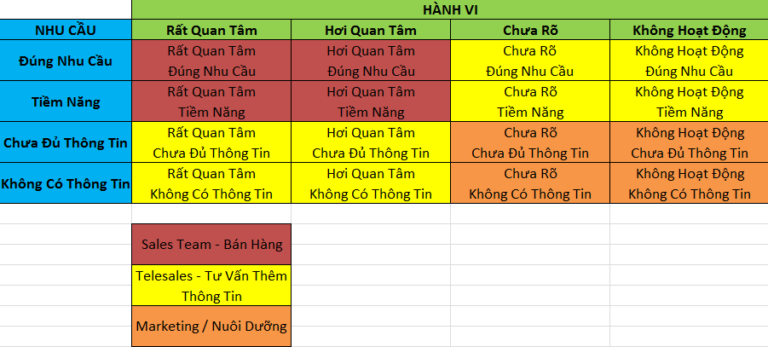
Depending on the levels of need and behavior, you can categorize customers into four distinct groups and assign them to the appropriate departments:
-
The sales department will handle customers whose needs and behaviors are clear because these are the customers who are ready to buy the project or use your services.
-
The telesales/customer care department will target customers who have shown one of the two factors but lack sufficient information to be effectively advised and sold to. The task of this department is to gather enough information before transferring them to the sales department.
-
The marketing department will continue advertising and sending different messages to customers who have no clear information or needs, in order to collect more information from them before passing them to customer care or sales.
Create Dashboards to Track KPIs
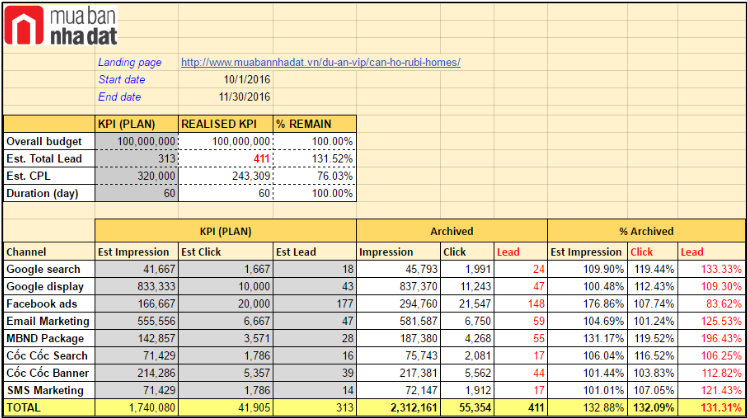
- Create dashboards in Excel or Google Sheets to track advertising costs, the cost per customer data, or conversion rates from customer data to consultations or project purchases. You should also make a habit of reviewing data at specific times of the day, such as checking in the morning at 9:30 and in the afternoon at 4:30.
Monitor and Optimize Advertising

If you run your own ads, this is something that goes without saying and is essential. Digital advertising needs to be monitored and continuously optimized to be effective. You can’t just set up ads and let them run on their own, thinking they’ll bring customers to you. Without regular monitoring and optimization, the effectiveness of your ads will gradually decrease over time.
If you outsource the ad management, you still need to track performance by asking them to provide detailed reports, so you can assess the effectiveness.
Be Flexible to Gain a Competitive Advantage
I use the image of a beautiful woman to represent the project you want to sell. Below, I will point out two cases—what you should and shouldn’t do. The first case is something I see most companies still doing..
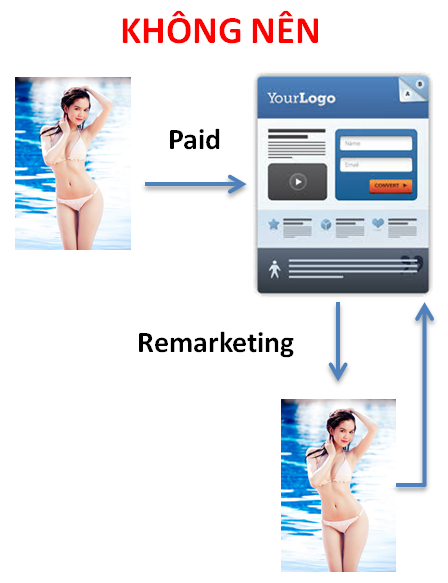
Customers click on an ad banner and land on the landing page. After leaving the landing page, they see retargeting ads following them on other channels. The problem here is that the retargeting ad is the same banner they clicked on initially, and even if they click again, they return to the same landing page they visited before. Clearly, not changing the banner will reduce the CTR, causing the cost per click to rise. Sending them back to the same page with the same content is quite a waste. So what should be done better?
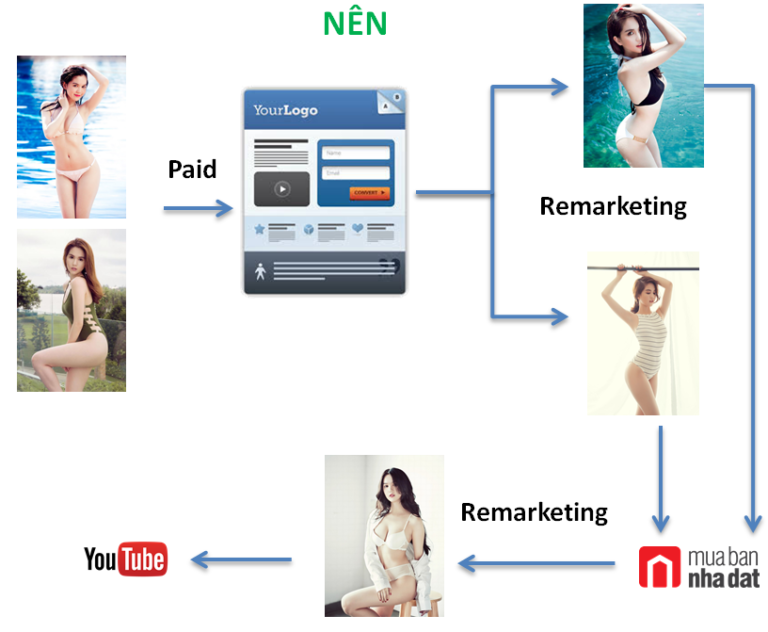
From the start, the ad banners should be diverse. After users land on the landing page, the retargeting banners should also be diverse and change so that users don’t get bored. Moreover, the destination of retargeting should not be the same landing page they previously visited. It might be better to direct them to a PR article, a listing, or a video to provide fresh content and increase the conversion rate.
See more products: Buy advertising accounts
In all of the above sections, I have explained how to target customers, build a customer profile, select the right channels to deliver the message, choose the right timing, and shared some ways to do better. Through this, I hope to answer the initial question: “If anyone can run ads, what can you, as a real estate sales agent, do to compete with other sales agents?”
As I mentioned, this article is set in the context of real estate, but many of these things can be applied and are useful across many different industries. I hope it helps you improve the effectiveness of your digital advertising campaigns and allows you to reach customers in a more effective and accurate manner.
If you need the most reputable payment method and advertising account provider, you can message the fanpage buybm365.com-Ads to receive advice from HT Media. In addition, you can follow the articles. Latest articles related to our Digital Marketing.