6 steps to SEO keywords to the top of Google quickly and effectively
We have noticed that there hasn’t been a clearly detailed article outlining the steps and methods to effectively, quickly, and safely SEO a keyword to the top of Google (TOP 1, TOP 3, TOP 5, TOP 10), whether the keyword contains accents or not, for beginners. This article will objectively and thoroughly explain how to SEO a keyword to the top of Google (which can also be applied to keyword SEO for Facebook or YouTube).
What is an SEO Keyword?
An SEO keyword (or simply “keyword”) is a word or short phrase that describes the topic of a webpage. In practice, a keyword is the search query you type into a search engine before hitting enter and waiting for results to appear.
When someone searches “men’s basketball shoes” on Google, the platform tries to understand the topic and user intent. From there, it presents a list of web pages relevant to that content.
If your website uses the exact phrase users are searching for as a keyword, or a part of the phrase (like “basketball shoes”) or a related phrase (like “men’s shoes,” “Adidas,” or “top basketball shoes”), Google may display your page at the top.
Keyword SEO is both a tactic and a crucial step that determines your website’s ranking on search engines. It involves several processes aimed at getting your keywords to rank on top of search results.
Why Is Keyword SEO Important?
In today’s competitive market, SEO marketing is more critical than ever.
Search engines serve millions of users every day looking for answers or solutions to their problems.
If you have a website, blog, or online store, SEO can help you get free, targeted traffic from search engines.
SEO is important because:
-
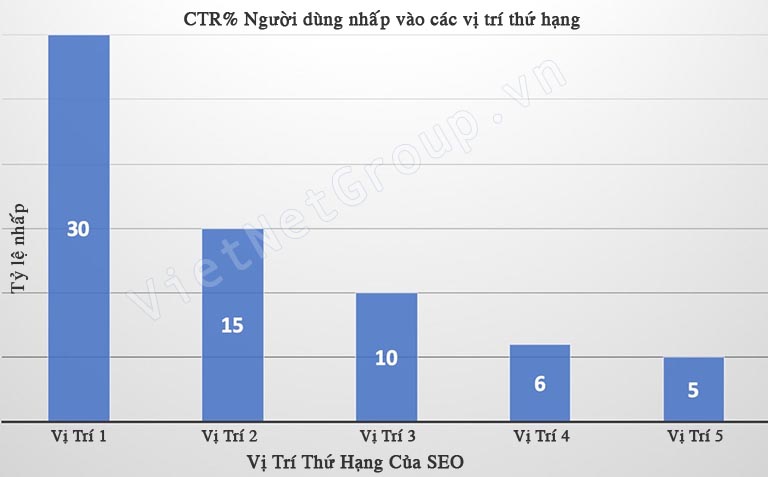
Most users click on one of the top 5 results on the search engine results page (SERP). To take advantage of this and attract traffic or customers, your website needs to rank among those top positions.
-
SEO isn’t just about search engines; it also improves user experience and website usability.
-
Users trust search engines, and ranking high for the keywords users search for increases website credibility.
-
SEO supports social promotion. People who find your website via search engines are more likely to share it on social media platforms like Facebook or Twitter.
-
SEO is vital for smoothly running large websites. Sites with multiple authors benefit directly from increased search traffic and indirectly through a standardized publishing checklist.
-
SEO can give you a competitive edge. If two sites sell the same product, the one optimized for search engines is more likely to get more customers and sales.
See more products: Buy advertising accounts
Types of Keywords
There are three basic types of keywords based on user intent:
Transactional Keywords
These are keywords users type in when they’re ready to purchase a product or service. For example, “clothing” or more specific ones like “plus-size evening dresses in Ho Chi Minh City.” These queries tend to convert well but are highly competitive.
To succeed, you must find low-competition long-tail keywords. Helpful keyword modifiers include:
-
Adjectives (e.g., best, discounted, red)
-
Brand names (e.g., Nike shoes)
-
Specific product descriptions (e.g., men’s basketball shoes)
Avoid targeting keywords for products or brands you don’t offer—it can do more harm than good.
Informational Keywords
These are used when users seek knowledge. They often contain question words like “what is” or “how to.” Example: “Vietnam history.”
Such keywords help build credibility and brand recognition. Though they don’t directly convert, they can lead to conversions later as users research before making a purchase.
Avoid writing PR-style content for these queries. Provide real, trustworthy information. You may include CTAs or promotions, but the content must be informative, not salesy.
Navigational Keywords
Users use these to reach specific pages or websites when they can’t recall the exact URL. Example: “Microsoft homepage” or “GTVSEO.”
You should optimize your own navigational keywords, but targeting others’ can be a waste—people searching “Microsoft homepage” won’t click on Apple or Debian Linux links.
6 Steps to Rank Keywords on Top of Google Quickly and Effectively
Step 1: Optimize the Entire Website
Check the Current Ranking of Your SEO Keyword
Start by checking where your target keyword currently ranks. Type one of your keywords into Google and observe the search results.
This list shows which websites Google believes are the most relevant for that search term. Reviewing the top results can give you insight into what those sites are doing well—URL structure, title tags, meta descriptions, heading tags (H tags), etc.
Optimize the URL
Let’s begin with a question: Between the following two URLs, which one do you prefer?
-
https://atpmedia.vn/thiet-ke-web-chuyen-nghiep -
https://atpmedia.vn/5/1/2019/thiet-ke-web/page/12
The first one, of course. It’s shorter, easier to read, and easier to understand. As a rule, Google prefers URLs with 3–5 words.
Always ensure your URL contains the main keyword and clearly reflects the page’s content. If Google can’t figure out what your page is about, it won’t crawl or rank it effectively.
Clear Title Tag
The title tag is a crucial part of on-page SEO. It’s one of the first things search engines crawl. Like the URL, your title tag should contain the main keyword.
A good title typically follows this formula:
[Engaging Phrase] + Main Keyword, Secondary Keyword + [Engaging Phrase]
Also, keep your title within 50–60 characters—that’s the limit Google displays in search results.
H2 Tags
H2 tags are subheadings. They break your content into clear sections that are easier for both Google to scan and users to read.
Meta Description
Meta descriptions are short paragraphs summarizing the page content. They help search engines understand what the page is about.
In late 2018, Google increased the meta description character limit from 160 to 320, allowing for fuller descriptions that better inform users about what to expect from your content.
Long-Form, High-Quality Content
Content is the most important factor in SEO and what Google pays the most attention to—because it directly benefits users.
Aim for long-form content between 1,500 and 2,000 words. Make sure it’s engaging, useful, unique, and offers long-term value.
Use Long-Tail Keywords
In addition to your target keyword, you should use a list of related long-tail keywords—phrases that include your main keyword along with common user intents such as “how to,” “best,” or “guide to…”
Use Multimedia
Text alone isn’t enough. Include multimedia such as images, videos, or infographics. These formats are highly engaging and more shareable.
Multimedia keeps users on your site longer and reduces bounce rate—both of which positively influence SEO rankings.
Image Alt Tags
Alt tags and image descriptions describe the content and function of images. This is what appears if an image fails to load.
Make sure your alt text accurately describes the image and includes your target keyword where appropriate. This helps search engines better understand and rank your site.
Add Internal Links
There are two main types of links in SEO: external links and internal links. Internal links are those that point to other pages within your website.
Mobile Optimization
Ensure your website is mobile-friendly—not just as a bonus, but as a necessity.
A mobile-optimized site means Google will primarily index and rank the mobile version of your pages (mobile-first indexing).
Step 2: Create Website Content
Analyze Topics
Choose topics that follow current trends and interests. The more unique and original the topic, the easier it is to rank highly—especially if it aligns with the product or service you’re promoting.
Analyze and Select Keywords Accurately
One of the biggest mistakes people make in keyword research is targeting only high-search-volume keywords, assuming they’ll reach more people.
However, these keywords usually have high competition. If your website lacks strong domain authority, it could take over a year to rank.
Example:
Using Keyword Planner, the keyword “office desk” shows 6,600 searches per month but has high competition.
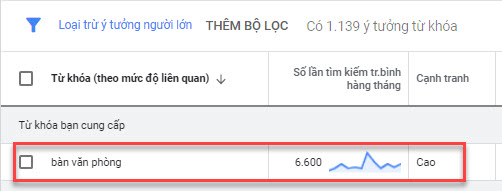
So for weaker or newer websites, these keywords are hard to rank for. Search volume alone doesn’t determine success. Instead, choose keywords with moderate search volume and lower competition to rank faster and reach customers sooner.
Example:
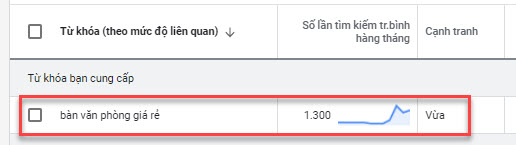
Instead of “office desk,” try “cheap office desk”—1,300 searches/month but only medium competition.
Choose Keywords With Moderate Competition
When searching on Google, you can compare the level of competition:
-
“Office desk” returns 179 million results → high competition.
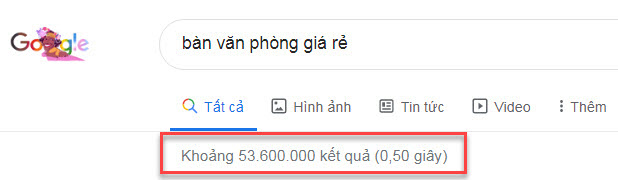
- “Cheap office desk” returns 53.6 million results → lower competition.

This means you’re competing with fewer websites, giving you 3 times better chances to rank.
In short, target long-tail, niche keywords with lower competition. Even if they have less search volume, they’re easier to rank for. Once your site gains authority and steady traffic, you can then aim for higher-volume keywords more effectively.
See more products: Buy advertising accounts
Choose SEO Keywords by Topic Groups
Another common mistake many website owners make is choosing too many individual keywords for SEO. This means that for each topic, product, or service, they typically choose only one main keyword to optimize.
Example: A client selling wallpaper products might choose only one keyword like “wallpaper” for SEO.
When keywords are selected this way, it often takes a long time to rank on Google. Additionally, the website content lacks internal linkage—meaning articles under the same topic don’t guide users from one to another. This makes it difficult to convince potential customers to buy your product or service.
In this case, GOBRANDING recommends selecting SEO keywords in topic-based groups to:
-
Support each other, speeding up the SEO process.
-
Build relevant content that guides users to explore more articles in the same topic.
-
Reach multiple aspects and target different audience segments for a single product.
Example: For the “wallpaper” topic group above, you can also target keywords like:
-
Korean wallpaper
-
3D wallpaper
-
Living room wallpaper
-
Beautiful wallpaper designs
-
…
Another example of how to build keywords in groups is shown below:

Do Not Choose Keywords That Are Too General for Sales Purposes
The third common mistake when building an SEO keyword list is choosing keywords that are too general, while the main goal is to generate sales. These keywords usually have high search volumes but lack specific intent. Therefore, even if these keywords rank high on Google, it will be very difficult to improve your website’s conversion rate.
Moreover, most of these keywords don’t reflect the user’s buying intent. People who genuinely want to purchase rarely search using vague or broad keywords. These are more suitable for brand awareness campaigns than direct sales.
Additionally, if your website lacks strong authority, it will be very difficult for these keywords to rank high on search engine results pages—unless you also target many niche keywords simultaneously (as mentioned in the section on choosing SEO keywords by topic clusters).
Example: If you select 10–15 keywords to SEO for a single topic, you may include one or two broad keywords, since the more specific ones can help push them to the top. However, if you’re optimizing 10–15 keywords across multiple unrelated topics, it will be hard to improve rankings for general keywords.
Therefore, if your SEO budget is limited and you want your keywords to reach the right audience and generate actual sales, you should focus on specific and detailed keywords. These have lower competition than general ones and offer a better chance of ranking high on Google.
- How to Create an Attractive Title
Nowadays, users are increasingly reluctant to read, so if you want to boost engagement with content marketing on Facebook or get more clicks from potential customers to your website, your titles must be compelling and “spiced up.”
Here are 5 useful tips:
-
Use numbers: Most readers are strongly drawn to numbers. Titles in list form often grab attention effectively.
-
Create curiosity: Use mysterious or intriguing language. This is a popular strategy in content marketing.
-
Include emotional triggers: According to a BuzzSumo study, seven emotions attract readers the most: sincerity, humor, surprise, inspiration, beauty, warnings, and shock. Emotional appeal is powerful and often creates breakthrough results.
-
Use questions: Questions spark curiosity and encourage readers to continue reading to find answers and solutions.
- Writing SEO-Optimized Content for Google
Google’s evaluation of website quality depends on keyword usage in the content—and more importantly, on content quality itself.
Meeting basic keyword requirements—such as including the main keyword, secondary keywords, and placing them in headings—only satisfies the initial requirement for Google’s algorithm.
Many SEO service websites provide SEO writing formulas or step-by-step guidance for SEO-friendly content, typically covering:
-
Including the SEO keyword in the main title (Heading 1 – H1)
-
Including the SEO keyword in subheadings (Heading 2 – H2)
-
Including the keyword in content under subheadings (Heading 3 – H3)
-
Placing the keyword in the conclusion paragraph
The second important factor determining a content’s effectiveness is user behavior: traffic volume and bounce rate. That’s why the SEO community often says, “Content is King.”
Step 3: Build a Backlink Network
Everyone knows that quality backlinks are crucial, but not everyone knows how to get them. Many people waste time on forums that provide low-quality backlinks—a deadly mistake.
Use tools like Seoquake or MozBar to find high-quality backlinks. Focus on metrics such as:
-
PA (Page Authority) and DA (Domain Authority) over 30
-
Linkout under 20
-
Domain age—the older, the better
-
Large number of members and indexed pages
Once your on-page SEO is in place, build your off-page strategy by creating backlinks from the following sources:
-
Forums
-
Buyer websites, classifieds sites
-
Web 2.0 properties
-
Private Blog Networks (PBN)
-
Satellite websites
-
Social and network sources:
SEO Facebook Fanpages, SEO Facebook Events, SEO Facebook Notes, SEO Google Maps, SEO LinkedIn, SEO Medium, SEO Twitter, SEO Pinterest
Step 4: On-Page Optimization
On-page SEO is the process of optimizing individual landing pages on your website to rank higher and earn more relevant traffic from search engines.
On-page SEO refers to content and HTML source code optimizations such as:
-
Text content
-
Images and multimedia
-
Meta tags, etc.
This contrasts with off-page SEO, which focuses on external link-building activities.
Step 5: Increase Website Traffic
Traffic is a key indicator of a website’s credibility and helps determine how useful the site content is to users.
Important metrics that influence keyword rankings include:
-
Onsite time
-
Bounce rate
-
Pages per session
The more traffic a site receives, the lower its Alexa rank, the faster its content is indexed, and the more favorably Google views it. Traffic is essential for SEO.
Traffic can come from various sources:
-
SEO rankings on Google, Bing, Yahoo, Cốc Cốc, etc.
-
Social media platforms like Facebook, Google+, YouTube, etc.
-
Referral traffic from other websites (via link exchanges, banner ads, etc.)
-
Direct traffic (users typing the URL directly)
-
Paid ads like Google Ads, Facebook Ads, Zalo, Cốc Cốc Ads, etc.
See more products: Buy advertising accounts
Step 6: Analyze, Evaluate, and Improve Your Strategy
No matter what you do, always measure and evaluate your performance to improve next time.
Monitor and refine weak areas. Focus on:
-
Page views per day/month/session
-
Onsite time—if it’s under 2 minutes, you need improvement
-
Bounce rate—if it’s over 70%, optimize the site to reduce it
-
Focus on improving user experience: make it easy for visitors to interact and find content
Use the following tools to evaluate your website’s performance and value for better SEO strategies:
-
Google Analytics
-
Google Webmaster Tools
-
Ahrefs
If you follow all these steps, you will surely be pleased with the result: your keywords will start moving closer to Google’s top rankings.
Usually, it takes about 5–7 months for SEO efforts to show results. Don’t rush—be patient and practice safe SEO to achieve and sustain good results.
If you need the most reputable payment method and advertising account provider, you can message the fanpage buybm365.com-Ads to receive advice from HT Media. In addition, you can follow the articles. Latest articles related to our Digital Marketing.